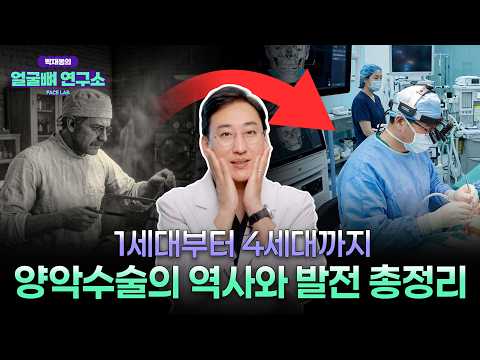
Dr. Park’s Facial Bone Research Institute: FACE LAB
MACS
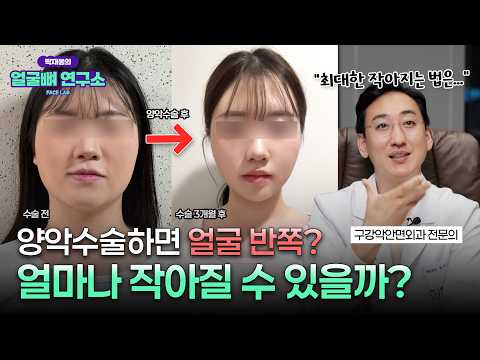
Double-jaw surgery (two-jaw surgery) is a type of orthognathic surgery that repositions both the upper and lower jaws simultaneously.
Performed under general anesthesia, it moves the maxilla (upper jaw) and mandible (lower jaw)—including the dentition—to optimize dental occlusion while enhancing facial proportions, length, and profile angles.
There is no single fixed figure.
The jaw cannot simply be shortened to the absolute anatomical limit, as surgeons must carefully account for both functional factors (such as nasal airway patency) and aesthetic harmony (maintaining natural facial proportions).
No. Soft tissue does not move up in a 1:1 ratio with the underlying bone.
Typically, the soft tissue elevates by only about 10–40% of the skeletal movement, though this ratio can vary depending on the specific surgical technique.
Moving the upper jawbone upward shortens the midface because the attached soft tissue shifts up with it.
In a Le Fort I osteotomy, the maxilla is cut horizontally at the level of the nasal alae and repositioned upward. As the soft tissues around the lips, philtrum, and nose are anchored to the bone, they elevate together, resulting in a shorter midface.
The philtrum belongs to the lower face.
Since the philtrum is located below the nose, it belongs to the lower face, not the midface.
The midface extends from between the eyebrows to below the nose.
The upper face extends from the hairline to the center between the eyebrows (Glabella), the midface from between the eyebrows to below the nose at the base of the columella (Subnasale), and the lower face from there down to the tip of the chin (Menton). For convenience, the face is divided into the upper face, midface and lower face.

Dr. Park’s Facial Bone Research Institute: FACE LAB