Dr. Park’s Facial Bone Research Institute: FACE LAB
MACS
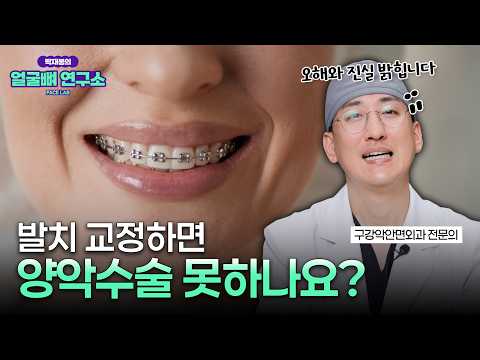
A. With a skeletal protruding mouth, it is difficult to completely eliminate the protruding appearance even with extraction orthodontics.
When the upper and lower jawbones themselves protrude forward, or when the entire alveolar bone protrudes together with the jawbones, surgery to set the bone itself back is necessary. Surgical options include double-jaw surgery and ASO (protruding mouth surgery).
A. A protruding mouth can be divided into two types according to the cause: dental protrusion and skeletal protrusion.
Because the treatment method differs depending on the cause, it is important to first accurately diagnose which type it is.
A. Typical features are difficulty closing the mouth, or a sulky or retrognathic appearance when the mouth is closed.
Because the lip tissue is relatively insufficient, it may be difficult to close the mouth comfortably. A gummy smile, in which a lot of gum is shown when smiling, is also one of the features, and in some cases the mouth does not close well, making the inside of the mouth feel dry.
A. A protruding mouth is a condition in which the occlusion is generally aligned, but the skeleton or teeth protrude forward, giving a sulky impression.
In many cases, aesthetic improvement is needed more than functional correction. When viewed from the side, if the upper and lower lips protrude beyond the line connecting the tip of the nose and the tip of the chin (E-line), it is commonly diagnosed as a protruding mouth.
A. There is no fixed maximum; it can vary depending on the positions of the upper and lower teeth.
The jaw is set back by the amount corresponding to the tooth angles established through pre-surgical orthodontic treatment, to align the occlusion. Therefore, how far it will actually be set back can only be determined once the surgical plan is made, and it is difficult to say "up to a maximum of so many mm" in advance.
A. It is possible in some cases.
In the following cases, it may be resolved with chin surgery (genioplasty) alone.
A. Setting the lower jaw back significantly narrows the airway space behind the tongue, which can cause severe snoring after surgery.
A narrowed airway can lower the overall quality of daily life, and the upper jaw may also look more retruded.
A. Depending on the case, double-jaw surgery is needed when the asymmetry is severe or the upper jaw is significantly retruded.
A. It is possible depending on the case, but in many cases it is difficult to achieve proper occlusion with single-jaw surgery alone, so double-jaw surgery may be needed for more stable occlusion.
If the midline of the upper jaw is aligned, there is no asymmetry, and the anteroposterior position of the upper jaw on CT is within the normal range, treatment can sometimes be completed with single-jaw surgery, which operates only on the lower jaw (mandible) to set the jaw back, combined with orthodontic treatment. However, in many cases it is difficult to achieve stable occlusion between the upper and lower teeth by moving only the lower jaw. In such cases, double-jaw surgery, which also moves the upper jaw, is considered.
A. Not necessarily. Among people who visit thinking they have mandibular prognathism, there are quite a few who do not need surgery.
Mandibular prognathism is not always treated with double-jaw surgery. It is best to decide after photographs, X-rays, 3D CT and other data have been analyzed together at an oral and maxillofacial surgery clinic and you have heard the specialist's diagnosis and explanation.

Dr. Park’s Facial Bone Research Institute: FACE LAB